
By Lisa Glybchenko and Esther Hayes Grossman
Welcome to the sixth newsletter from The Facilitators in 2026! As we conclude our exploration of decision making and problem solving, we are thrilled to introduce you to the core principles of Convergent Facilitation and Integrative Decision Making, as (co- developed and practiced by the Nonviolent Global Liberation community (NGL). NGL recognizes that decision-making can be both an exciting way to embody a vision, and a source of challenge – lengthy discussions, sometimes polarization and conflict. NGL teaches Integrative Decision Making as a way to integrate across differences rather than falling into domination or compromise.
While the newsletter will focus on the method of convergent facilitation, NGL also practices and teaches several other methods. A training on the core principles and tools of integrative decision making will be offered to the community of The Facilitators later this year. More about this can be found at the end of the newsletter, so read on!
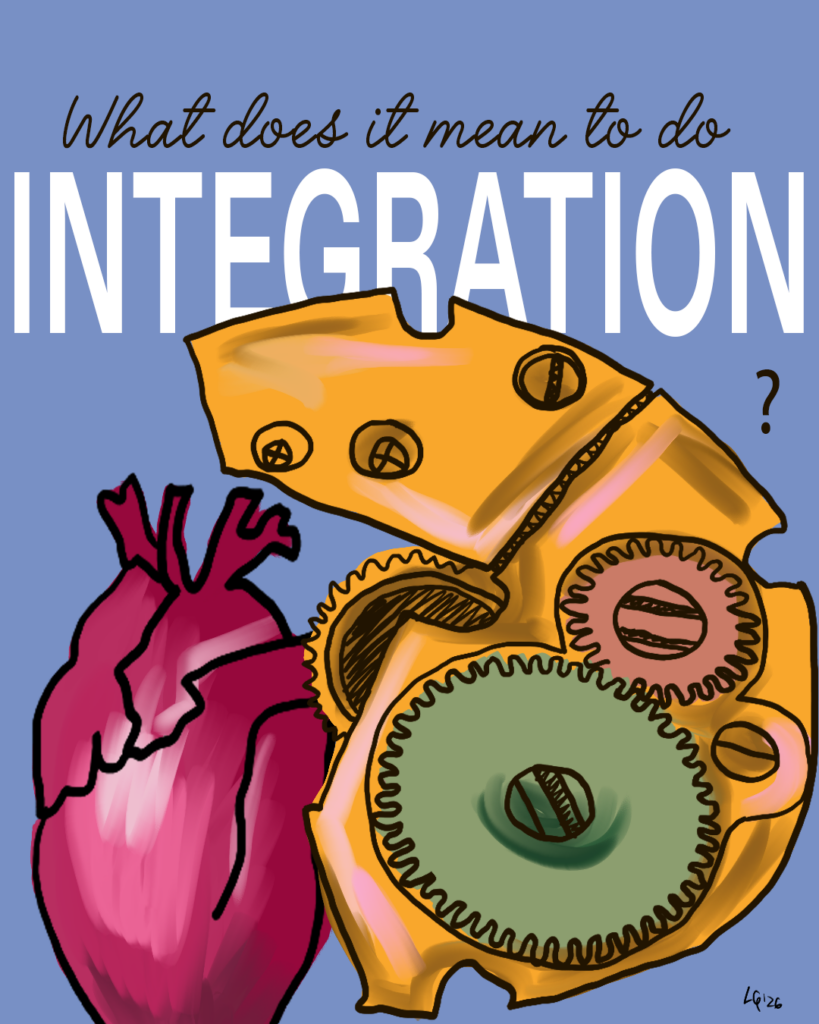
Convergent Facilitation: A Sneak Peak
Convergent Facilitation is a process developed by Miki Kashtan, that allows groups to reach decisions in a collaborative manner, as opposed to zero-sum or imposed decision arrangements. It is based on the principles of Nonviolent Communication and has been applied to a variety of contexts. Some examples include debates on child labour and innovating ways for better community living for both humans and pets in New Delhi.
The process of Convergent Facilitation usually follows three distinct phases:
- Understanding what is important to everyone in the room and writing it down in a way that is non-controversial. The key element of this phase is to shift from opinions to shared needs.
- Working with the list to create a proposal, or several proposals, to move to a decision that works for everyone. The key element of this phase is to unleash creativity.
- Assessing together which proposal cares for all that is important to the group and modifying it where needed to integrate dissent. The key element of this phase is to reach convergence through deeper and deeper integration.
Overall, the goal is not to reach a state in which every participant is completely or equally happy, but to allow the group to create a decision that is based on what matters to everyone, and that everyone can say yes to. In other words, this facilitated process is aimed to surface information about needs, impacts and resources, and to unlock willingness and creativity.
Facilitation as a Way of Caring for the Whole
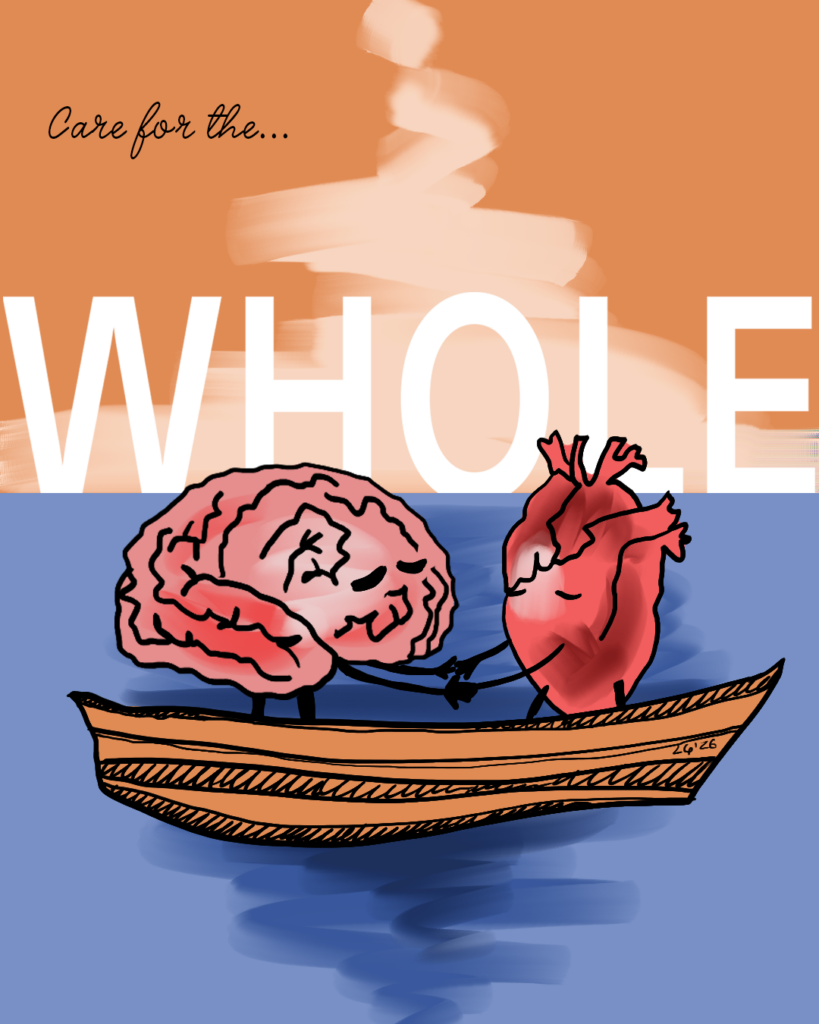
Convergent Facilitation is one of the many methodologies a facilitator can use to create a process of moving a group towards shared reality and decision. Integrative Decision Making is the lens we, as facilitators, can use to zoom-in on the less linear processes of integration. The core principle of Integrative Decision Making is caring for the whole. For a facilitator, that would mean asking some very important questions, such as:
- What does it take to do integration?
- How can I integrate the needs that I see?
- How much empathy is needed and how much do I keep moving the group towards decision making?
Asking such questions will help us build an orientation within our minds and hearts, which allows us to reach a solution that integrates as many needs as possible with the least amount of negative impact on the systems within which we exist.
Inviting Dissent to Reach Robust Decisions in a Group
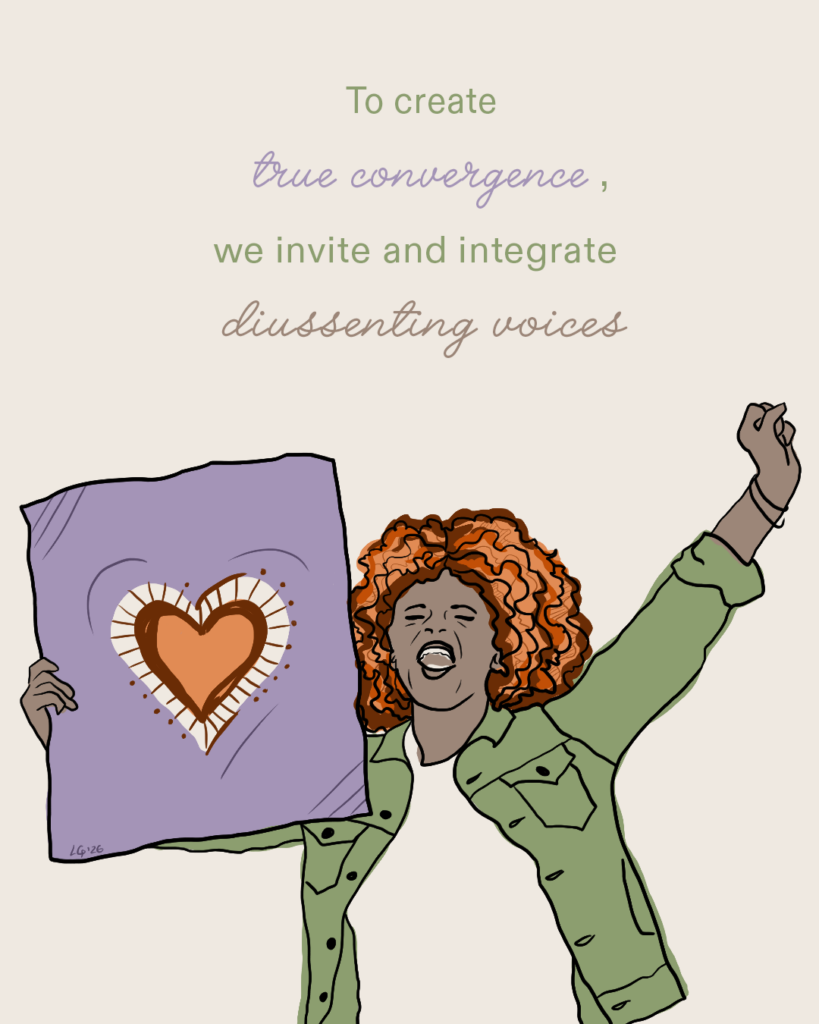
In thinking about guiding a group towards an integrative decision, facilitators may feel a degree of uneasiness about potentially facing dissenting voices within the groups they work with… seeing conflict unfold, in other words. But integrating dissent is a very important part of caring for the whole.

If a person is bringing new concerns, it means they have a consideration that has not been voiced, integrated or cared for. And inviting dissent is then a vital part of creating robust and creative solutions, which do not force participants to say yes when they mean no or overlook their needs entirely.
Overall, the process of integrative decision making means that we do our best to support collaborative and well held space where information about needs, impacts and resources can be discovered and utilized to land on the best possible solution for the group in question.
Join our online practice session
If you are interested to find out more about how to discover the needs, impacts and resources in a group we invite you to join our online practice session with trainers from the NGL community, who will share more about the core principles and practices of integrative decision making. The practice session will take place on Wednesday, 11th November 2026 at 10:00–11:15 am UTC+1 or at 4:00–5:15 pm UTC+1 on Zoom.
Register here for the 10:00–11:15 am UTC+1 session.
Register here for the 4:00–5:15 pm UTC+1 session.
These practice sessions are open to all our readers. Please note that a separate, more in-depth training will be offered exclusively to members of The Facilitators’ Community of Practice and will not be open to the public.