Dear Facilitators,
We’d like to welcome 2022 with our second quarterly newsletter dedicated to all-things facilitation!
In the first newsletter back in September 2021, we explored the importance of harvesting and reflection to capture learning and receive feedback that can help you improve in the future. That seemed fitting for the last quarter of the year.
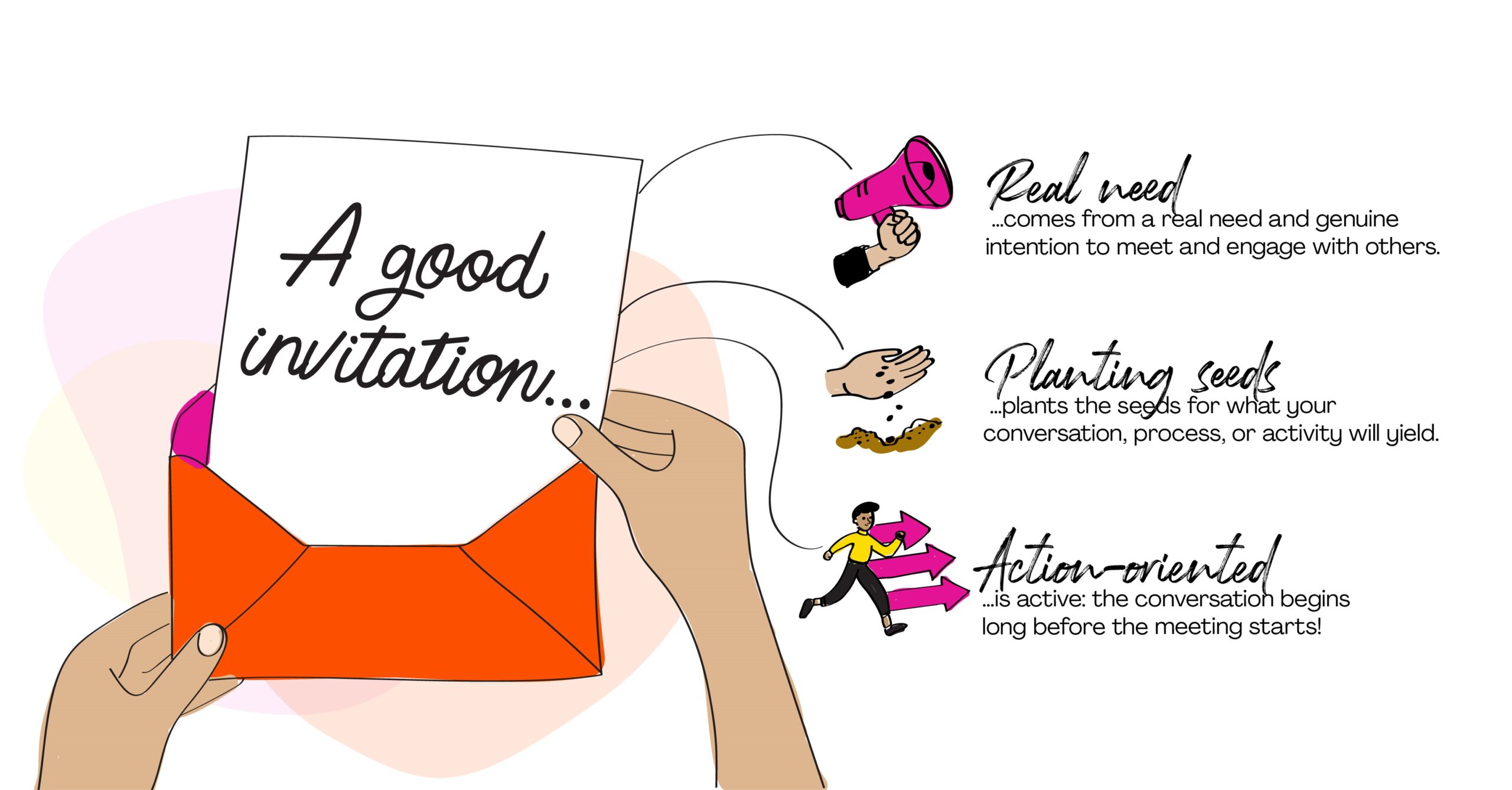
Now that a new year has just started, we’d like to turn your attention to the art of invitation for the success of your gathering.
Did we spark your curiosity? Then read on!

A few months ago we listened to the On Being podcast episode “Remaking Gathering: Entering the Mess, Crossing the Threshold” in which podcast host Krista Tippett conversed with Priya Parker, a conflict resolution strategist and author of the book “The Art of Gathering: How We Meet and Why It Matters”.
At one point of the conversation, Priya mentioned what one of her mentors, Randa Slim, would tell her (when talking about conflict dialogue rooms): “90 percent of what happens in the room happens because of what we’ve done before” meaning that as facilitators our preparation, our invitation, our framing, our narrative, etc. play a huge role in the success of our gathering.
Okay, maybe it’s not 90% exactly, but the point is that how we invite people (and who we invite) is super important!
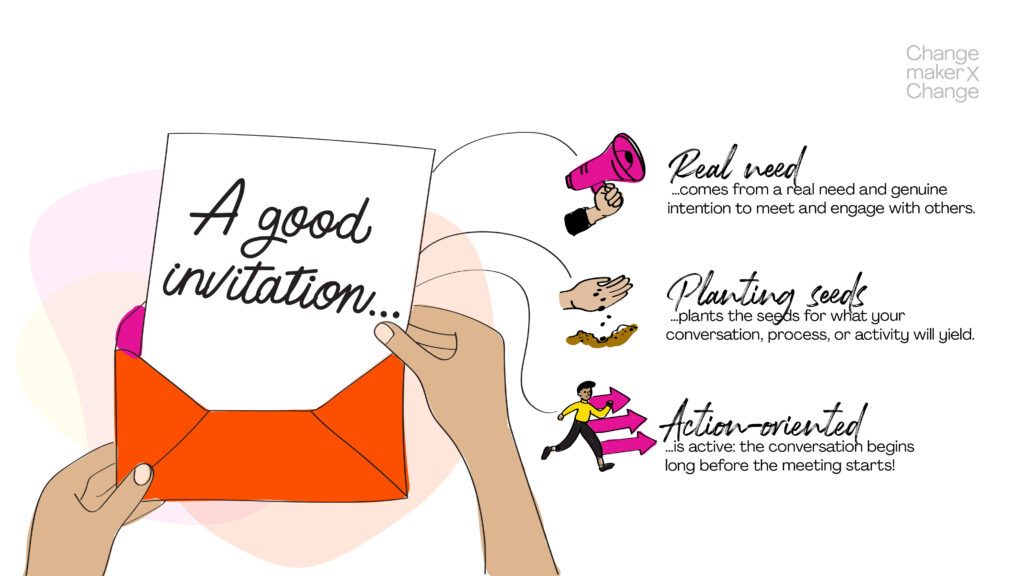
To help you better understand the key principles to create powerful invitations, we’d like to refer to this accessible blog post “A Little Secret to Participatory Leadership: The Art of Invitation” by Samantha Slade of the Going Horizontal movement.
You can find more details about each principle there, but in a nutshell, here are the four C-principles.

Next time you’d like to extend an invitation (to your co-worker, to participants in an event, to your friends…), please ask yourself the following questions to ensure you give invitees an actual choice:
- Does the invitee have a choice to accept or decline your invitation?
- Is your invitation a genuine invitation or a request in disguise?
- Does your invitation feel enticing but not coercive?
- Would the invitee feel equally okay responding ‘yes’ or ‘no’?
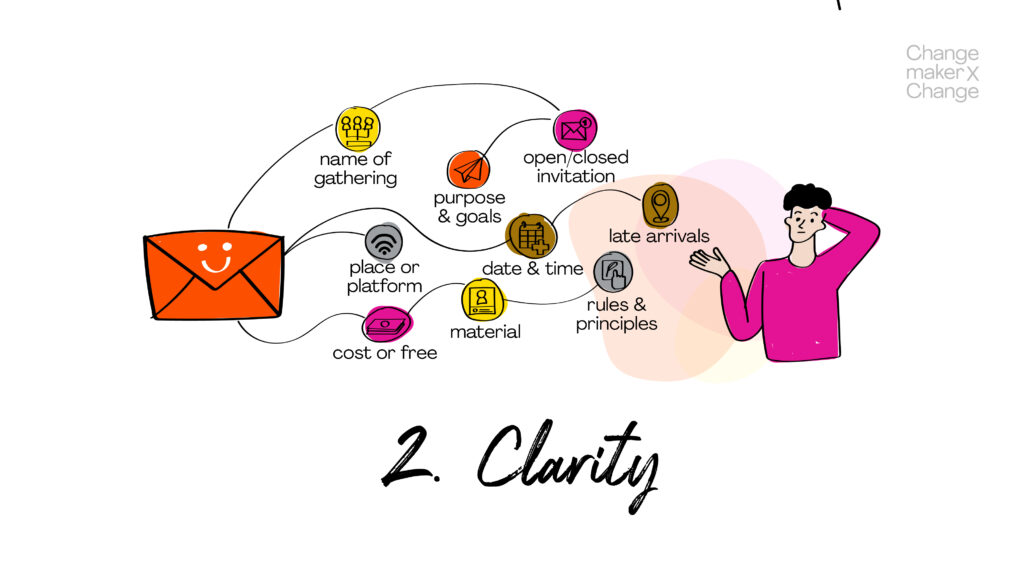
Once you have made sure they have a choice, use the following questions to ensure you frame your invitation in a crystal-clear way:
- Does the invitee know what they would be getting into if they said yes?
- Do they feel informed without feeling overwhelmed?
- Do they have everything needed to come prepared and contribute?
- Do you have a back-up plan for those who say no or might miss parts?

As we mentioned in our introduction, it is both about how you invite people and who you invite. Refer to the following questions to ensure your invitation is inclusive:
- Who might feel excluded (if they discover they weren’t invited)?
- What biases and blind spots do you have that might lead you to exclude certain people?
- Does the invitation make the invitee feel good?
- Does it contribute to their sense of belonging?

Being inclusive doesn’t mean that everyone should be there. That’s why it’s helpful to clarify a few criteria to clarify your constraints and boundaries so people know who this is for and what is expected of them. Reflect on the following:
- Why is your gathering happening?
- What is the role for the invitees?
- Are the boundaries of your invitation clear?
- Does your invitation help the invitee understand the wider context of what is going on?
You might be surprised by what happens when you extend good invitations.
Remember, it’s not about getting it perfect, but about daring to open an intentional space for your invitees to show up, come together, and share.
•••

Let us dare to practice.
We would like to invite you to join a one-hour call on Thursday, 27 January 2022 at 2:00–3:00pm GMT+1 to practice the art of invitation. The call is open to anyone who attended one of our online ToT summits. This means that you will also have the chance to meet and exchange with other facilitators from our extended community of practice.
To make the most of this call, please think ahead of an upcoming invitation you would like to extend so you can practice and bring a notebook and a few coloured markers or pens for notetaking.
The call will take place on Zoom (link here) and we will shortly send you a calendar invite which you can accept, tentatively accept, or decline. This will help us get a sense of how many participants to expect.