By Greta Rossi
Dear Facilitators,
Welcome to the fourth newsletter from The Facilitators in 2026! In the first half of the year, we focused on the skill of multiperspectivity, whereas now we turn our attention to the skills of decision making and problem solving, which can be briefly defined as “the ability to assess situations and take action proactively”.
The skills of decision making and problem solving
This first piece focuses on introducing the skills of decision making and problem solving in depth, with a particular attention to their relevance in the field of facilitation. The second piece will contextualise them by learning from the lived experiences of practitioners engaging in a constructive dialogue. And the third piece will make use of artistic expression to introduce a method to support decision making and problem solving.
Isn’t that why they hire you?
You may think it is inherent to your role as a facilitator to support a group to make decisions and solve problems. Isn’t that why they hire you, on many occasions? To help a team get out of gridlock, to move beyond hierarchical power structures, to address a problem in an efficient manner, to empower team members to take ownership of solutions… And are you not constantly making decisions and solving problems as a facilitator whenever you are guiding a group through a process?
If you search the Internet for “decision making in facilitation” or “problem solving in facilitation”, you will soon be inundated by resources that share techniques, processes, exercises to support decision making and problem solving. Amidst these, we attempt to assert the importance of decision making and problem solving – in the context of facilitation – by indulging in a critical reflection of traditional definitions.
Beyond traditional problem solving
Let’s start from the latter: problem solving. In “Community: The Structure of Belonging”, author Peter Block defines the strategic elements of traditional problem solving:
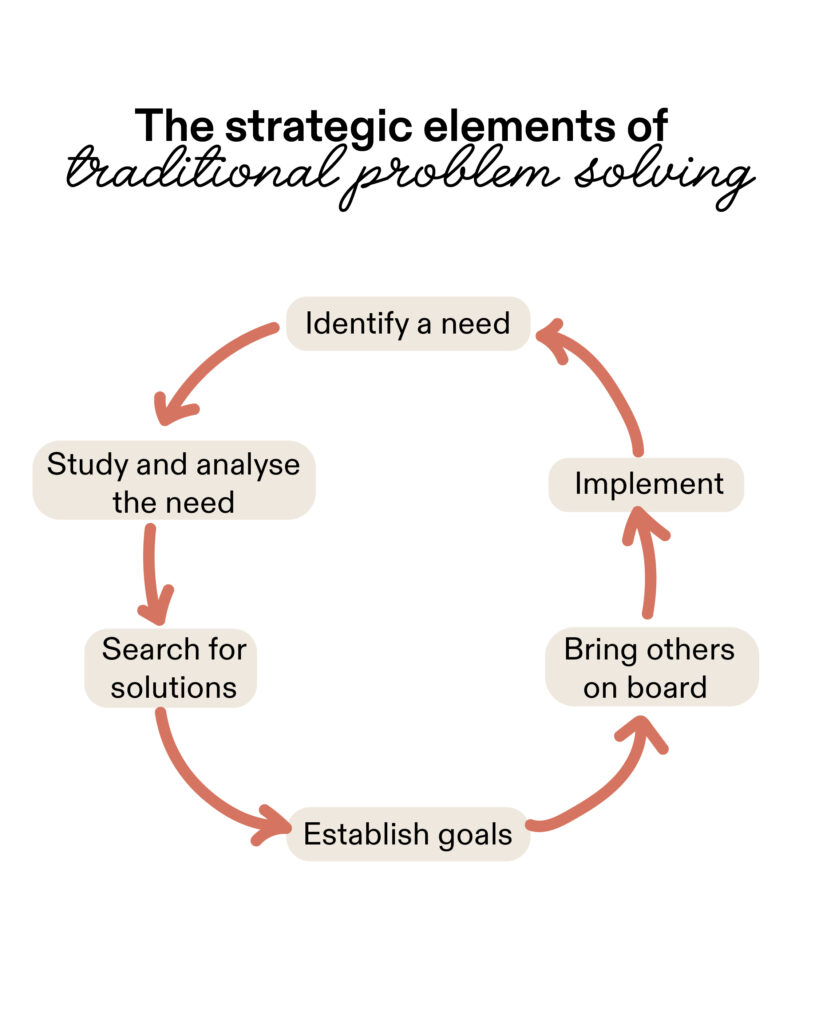
Block points out that at the core lies “the belief that the way to make a different world is to define problems and needs and then recommend actions to solve those needs”. However, Block warns, “this way of thinking does not work well with human systems”. No matter how clear the vision or how detailed the plan is, it is only through continued engagement and involvement of participants (and learning) that you can tap into their collective power to imagine new possibilities for the future. This understanding is underpinned by two key shifts:
- From an end to a means. Problem solving is no longer the goal of the gathering, but an organic and relational process that supports and sustains the structures of belonging. Notice the focus on “relationality” in problem solving. By focusing on strengthening the relational web in the group you are facilitating, you make space for restoration, healing, and transformation.
- From problem solving to possibility. The focus of the conversation is no longer about solving a problem, but about envisioning a possibility, which is a future beyond reach. In fact, restoration, healing, and transformation become possible when you move from a retributive conversation (a problem to be solved) to a restorative conversation (a possibility to be lived into).
Beyond traditional decision making
What about decision making? In “Reinventing Organizations”, author Frederic Laloux journeys through the history of how humankind has organised itself and notices how these organising models were tied to the prevailing worldview and consciousness of the time. As we present you with some examples1*, please bear in mind that every paradigm includes and transcends the previous, so it is not that subsequent paradigms are inherently “better” than previous ones.
- Red Paradigm (Impulsive): Around 10,000 years ago, the first chiefdoms and proto-empires emerged. The world was seen as a dangerous place, so a lot of value was placed on strength and toughness. The decision-making power rested with a chief or an authoritarian leader who asserted their power and control to guarantee survival.
- Amber Paradigm (Conformist): With the advent of agriculture, humans started to organise themselves in states, characterised by hierarchical institutions, bureaucracies, and religions. Here the decision-making power shifted to such institutions which guaranteed structure and order through rules and laws as well as loyalty and obedience.
- Orange Paradigm (Achievement): This is still the dominating worldview in business and politics today. By transcending amber consciousness of a fixed universe governed by immutable rules towards understanding the world as a complex clockwork, the decision-making power shifts to the individual. By focusing on result-orientation, this paradigm can turn highly individualistic, materialistic, and exploitative.
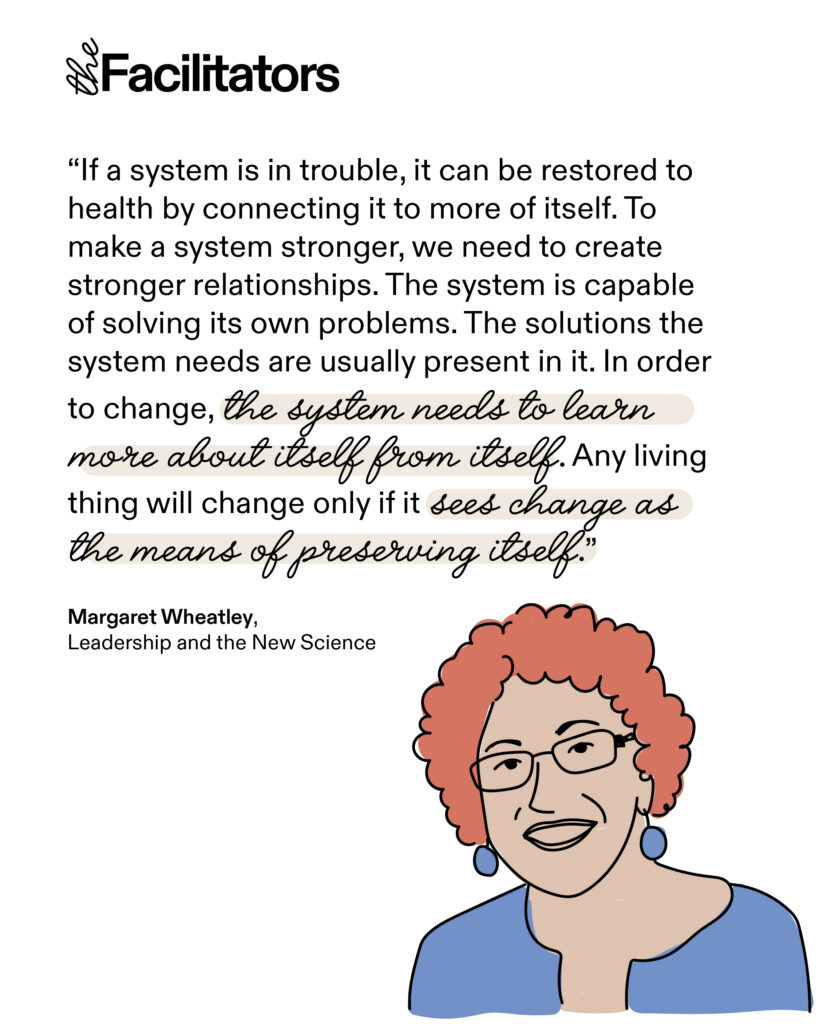
You might convincingly argue that these paradigms do not reflect how decision making happens in facilitation. In fact, most facilitators would probably resonate more with Laloux’s green paradigm (pluralistic), which is present in postmodern academic thinking as well as the non-profit world. Here, more emphasis is put on the values of community and equality to foster empathy and collaboration. In this paradigm, we see the centrality of relationality and the decision-making style is collaborative and consensus based. This paradigm brought about three breakthroughs that are important for facilitators.

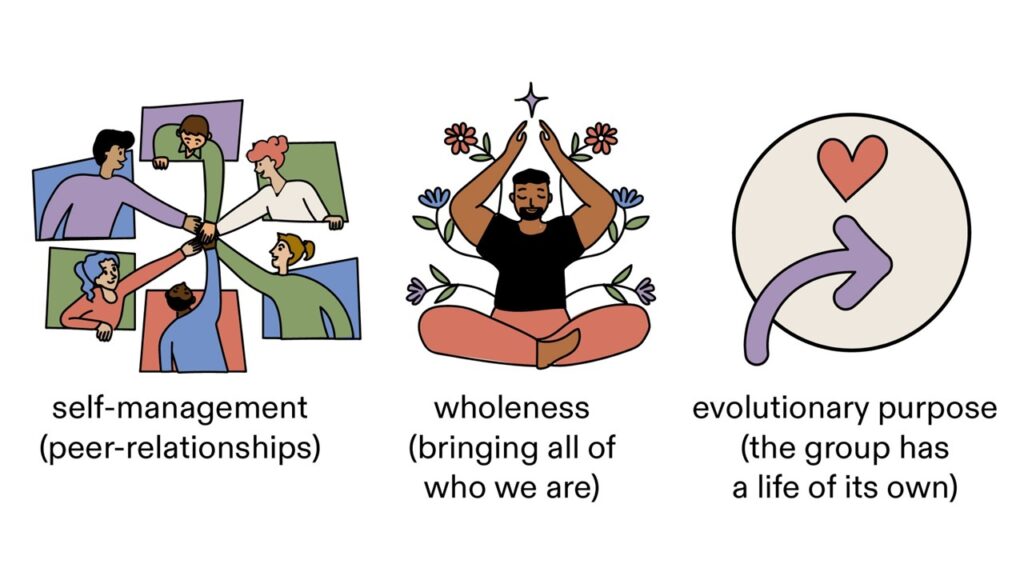
There is one more paradigm that has been emerging in recent decades, which Laloux calls the teal paradigm (evolutionary). Here, intuition and wisdom make the way for a deeper connection with self, others, and Nature. Decision making shifts from external to internal criteria with a focus on inner rightness and leadership looks more like coaching, with a focus on peer-relationships. This paradigm brings about additional breakthroughs that you should consider as a facilitator.
Cultivating shifts in perspectives and behaviours
Where do these critical reflections of decision making and problem solving leave you with? Does this mean you are supposed to drop them as competencies? Absolutely not! In fact, they are critical skills for a facilitator. However, what we suggest is that you focus on a different set of questions when you hold space for a group who needs to solve a problem and/or make decisions (questions which can also be relevant for you as an individual).
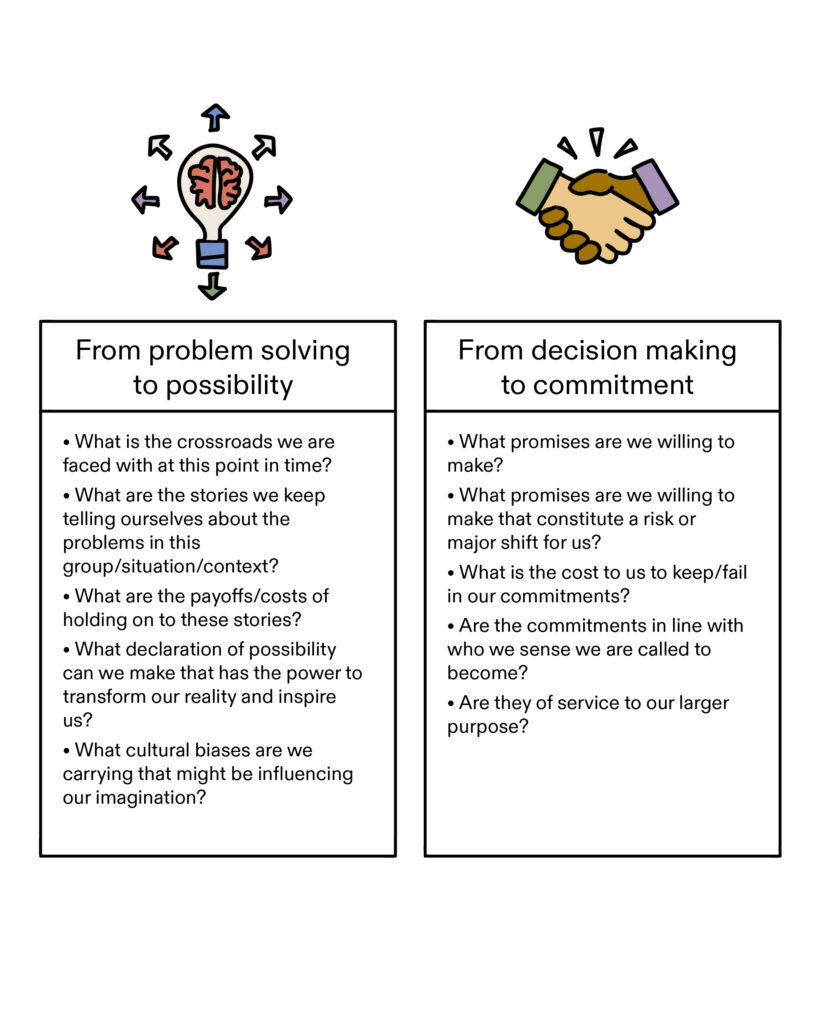
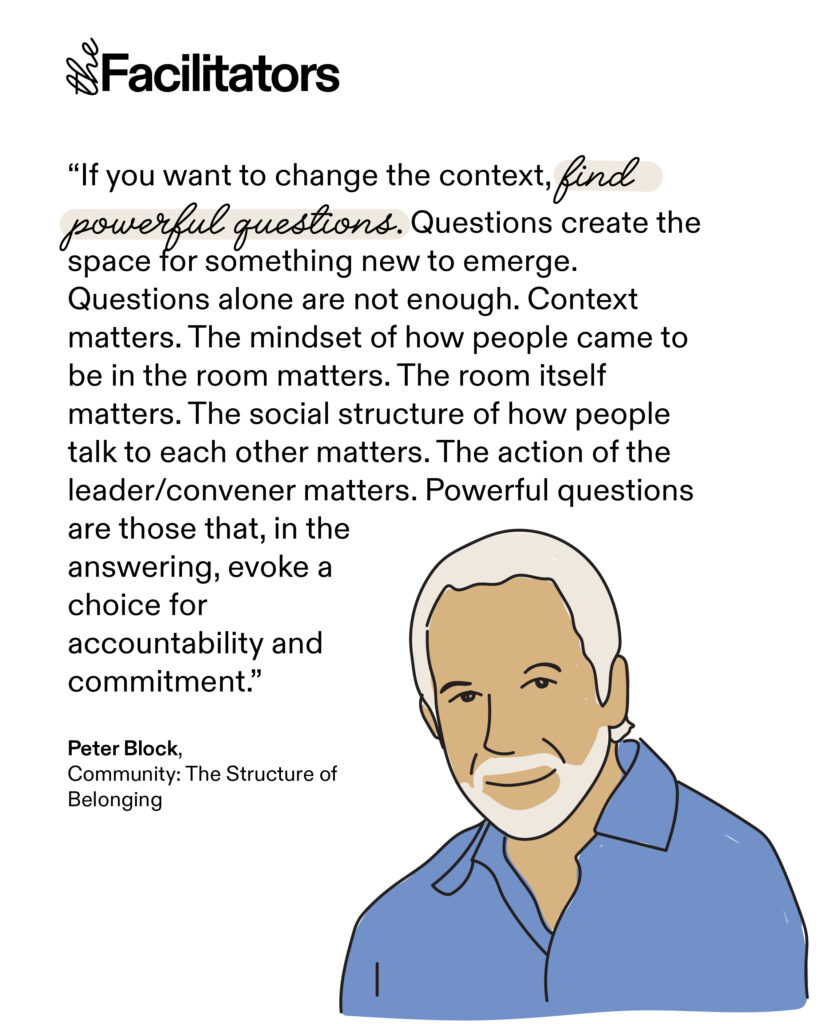
These questions have the power to engage your participants in an intimate and authentic way, to confront them with their autonomy and responsibility, and to invite them to co-create future possibilities that are motivating. Ultimately, questions are more powerful than answers because they make space for the future and invite engagement, which creates accountability.
Digging deeper
In the next newsletter, we will contextualise these skills to unearth additional nuances and practices. But in the meantime, here are some resources if you’d like to dig deeper:
- The facilitators’ role in futures thinking, The Facilitators
- The six conversations podcast, The Common Good
- Living the questions, On Being with Krista Tippett
Happy digging!
That’s all from us. In the next newsletter, we will dive deeper into the skills of decision making and problem solving by learning from different practitioners, so stay tuned!
- If you are curious to explore these paradigms in more depth, please check out the Reinventing Organizations Wiki. Kindly note that in the book, Laloux mentions two additional paradigms before the red paradigm: infrared paradigm (reactive) and magenta paradigm (magic). We didn’t include them here because they didn’t really feature complex structures. ↩︎