Dear Facilitators,
Welcome to our quarterly newsletter dedicated to all-things-facilitation and sent to all those who have been through one of our in-person or online Training of Trainers summits!
The main intention behind this newsletter is to offer you another way to keep learning about facilitation. That’s why each newsletter will dive deep into a specific topic related to facilitation and will share techniques, formats, activities, and tools that can be useful for your own facilitation. Moreover, each newsletter comes with an optional online call where you can practice some of the formats explored. And finally, we’ll also share updates about our upcoming training offerings so you can help us spread the word.
Are you ready to deep-dive? Read on!
As we approach the last quarter of 2021, we would like to explore the importance of harvesting and reflection to capture learning and receive feedback that can help you improve in the future. Harvesting and reflection can happen both at the individual and collective level so below we have captured some of our favourite methodologies, from simpler structures to deeper frameworks.
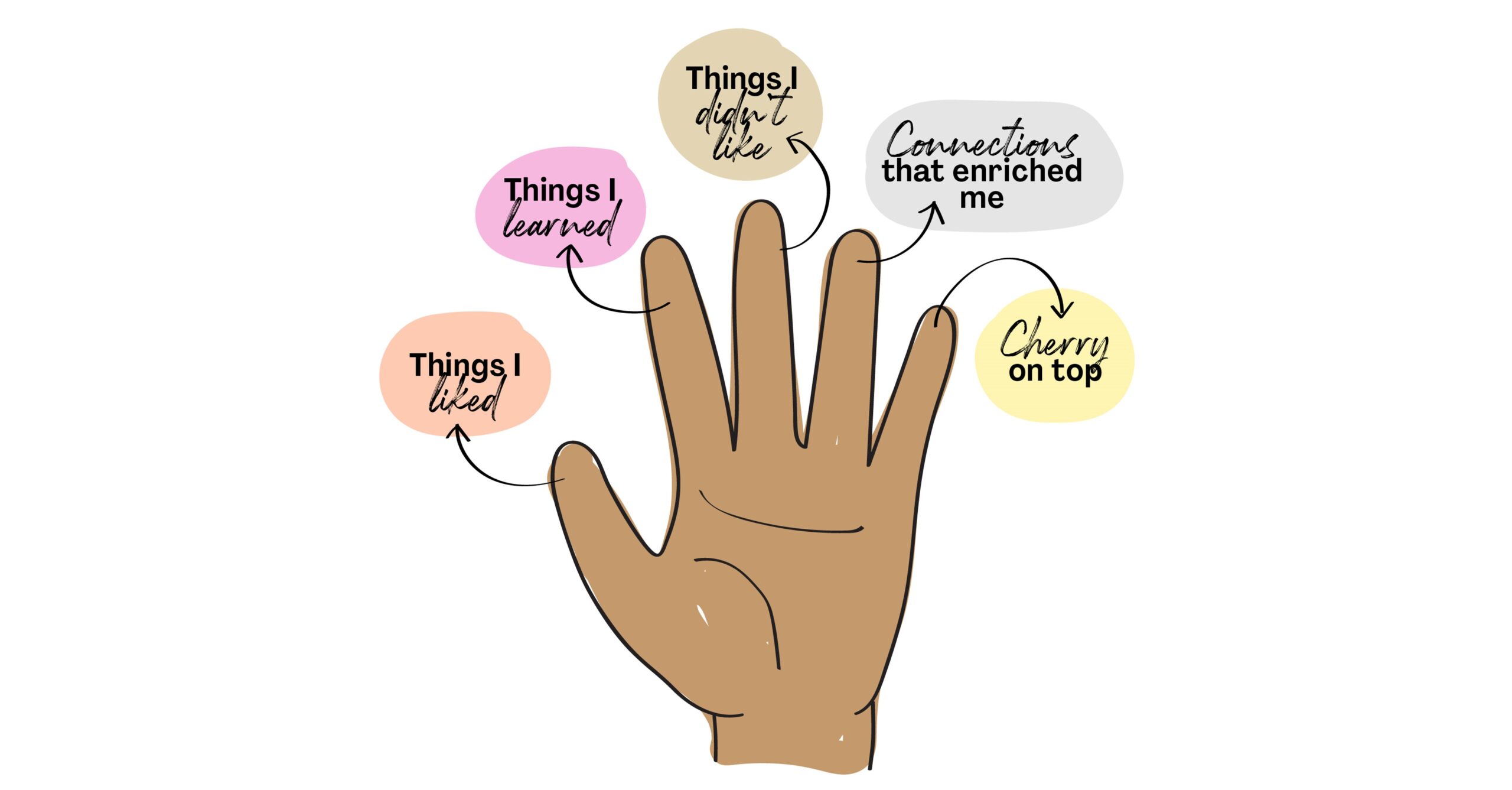
5-finger feedback
A simple and visual structure to collect feedback using the image of a hand, with each finger corresponding to a specific feedback cue.
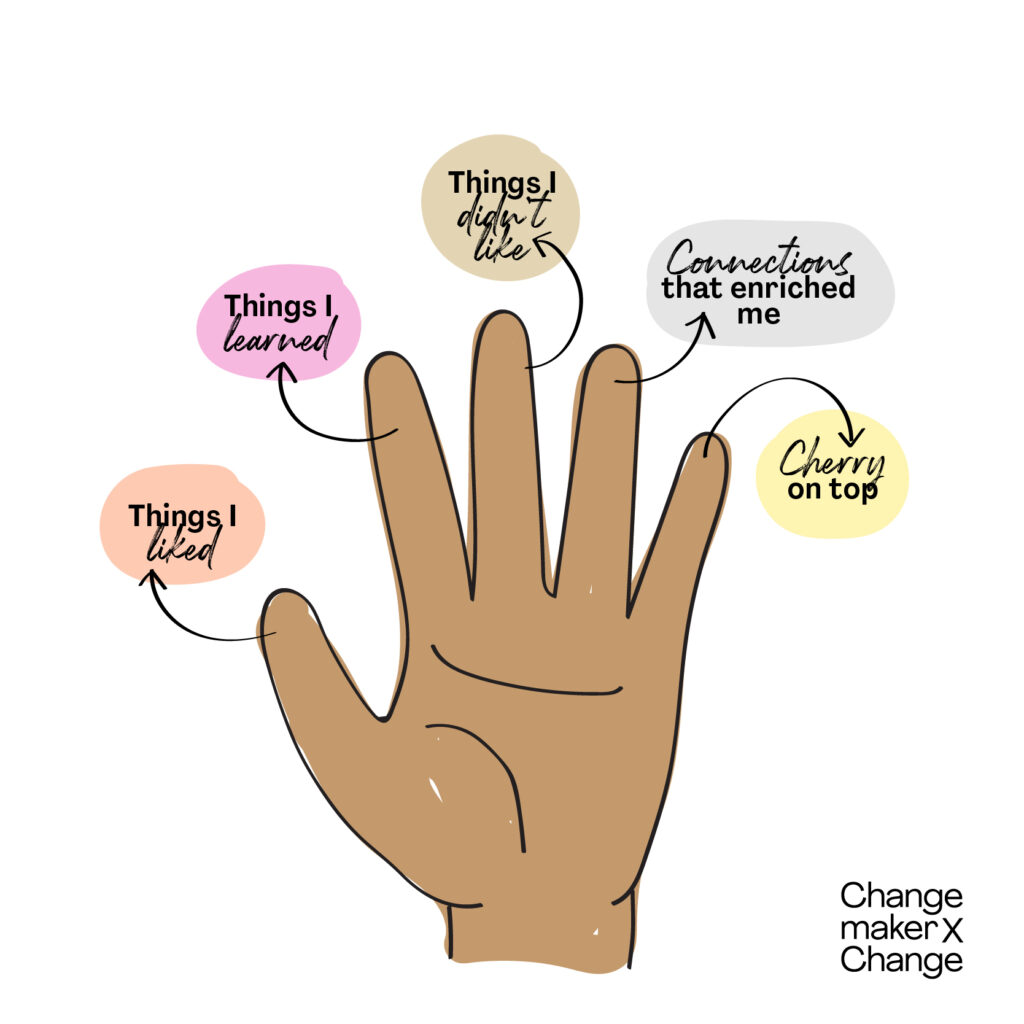
- Thumb: Things I liked
- Index finger: Things I learned
- Middle finger: Things I didn’t like
- Ring finger: Connections that enriched me
- Pinkie: Cherry on top
Plus–Delta–Heart
A simple and visual structure to collect feedback using three symbols: plus, delta, and heart, each corresponding to a specific feedback cue.
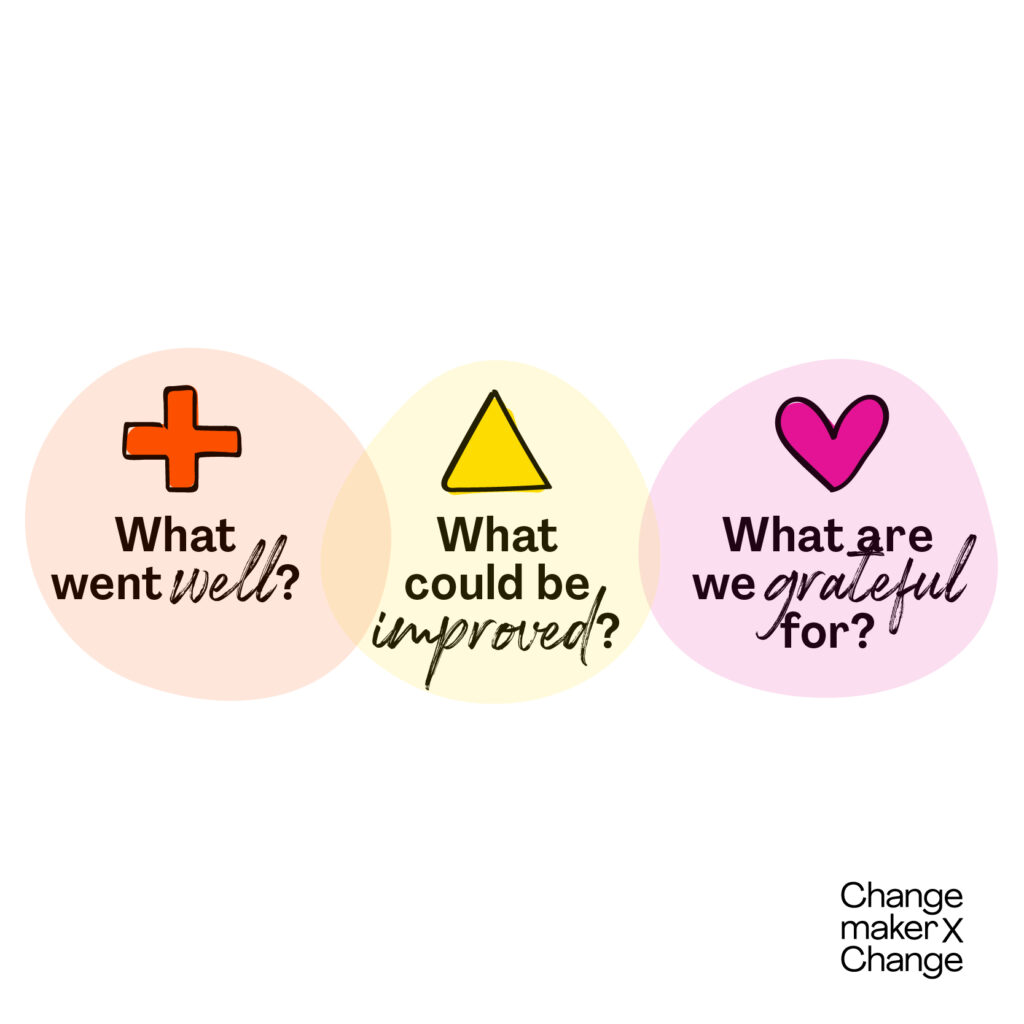
- Plus: What went well?
- Delta: What could be improved?
- Heart: What are we grateful for?
Roses–Thorns–Buds
A simple and visual structure to collect feedback using the image of a rose, with each component corresponding to a specific feedback cue.
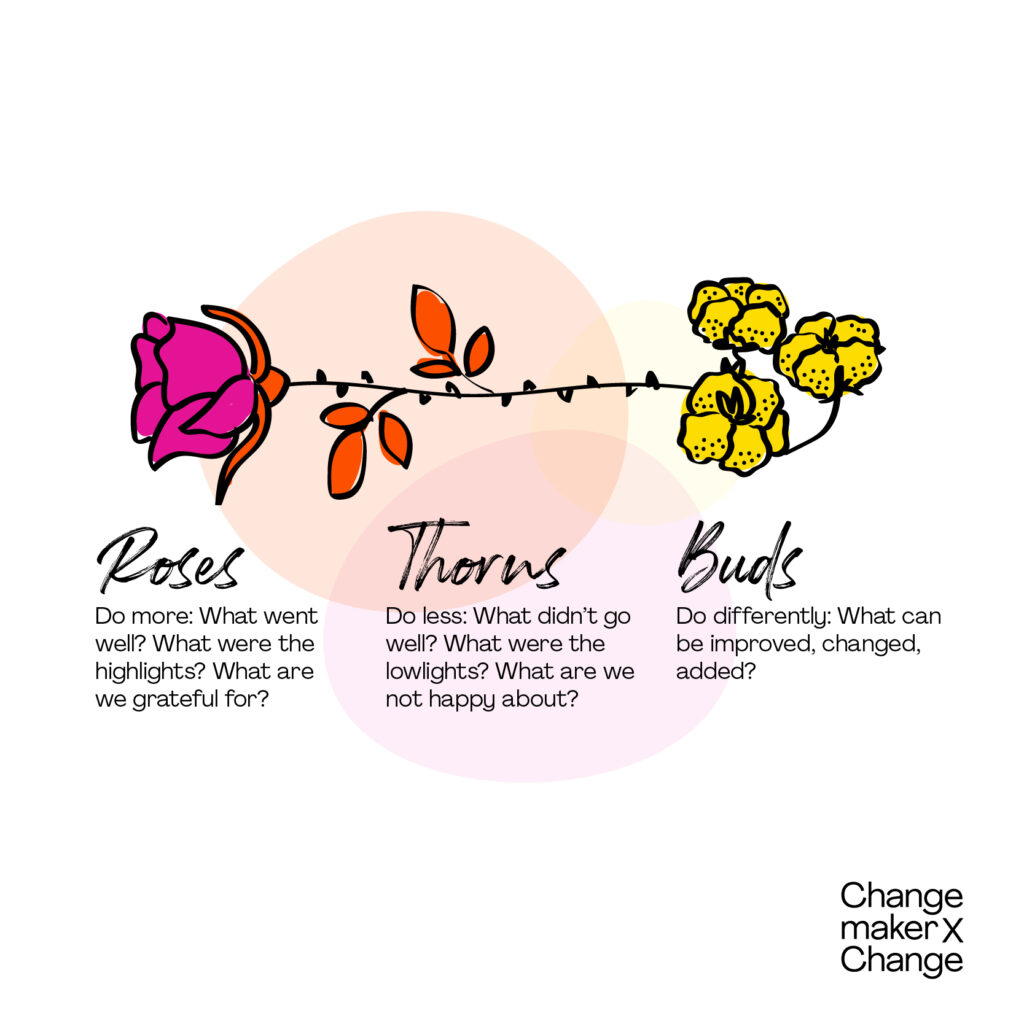
- Roses • Do more: What went well? What were the highlights? What are we grateful for?
- Thorns • Do less: What didn’t go well? What were the lowlights? What are we not happy about?
- Buds • Do differently: What can be improved, changed, added?
The four F’s of active reviewing
A deeper reflective framework designed by Dr Roger Greenway, consisting of four levels, each with guiding questions.
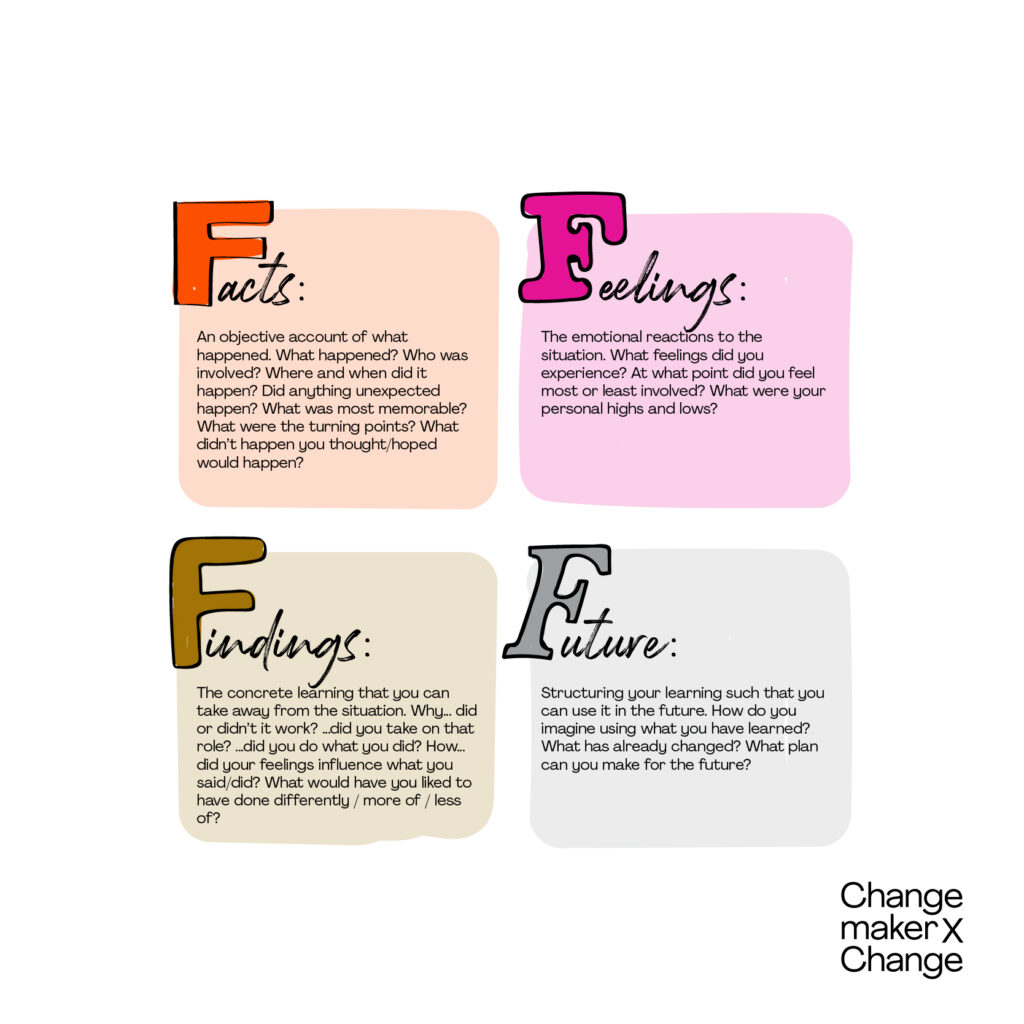
- Facts: An objective account of what happened. What happened? Who was involved? Where and when did it happen? Did anything unexpected happen? What was most memorable? What were the turning points? What didn’t happen you thought/hoped would happen?
- Feelings: The emotional reactions to the situation. What feelings did you experience? At what point did you feel most or least involved? What were your personal highs and lows?
- Findings: The concrete learning that you can take away from the situation. Why… did or didn’t it work? …did you take on that role? …did you do what you did? How… did your feelings influence what you said/did? What would have you liked to have done differently / more of / less of?
- Future: Structuring your learning such that you can use it in the future. How do you imagine using what you have learned? What has already changed? What plan can you make for the future?
The integrated reflective cycle
A deeper reflective framework (Bassot, 2013) which takes you through four steps, each with guiding questions.
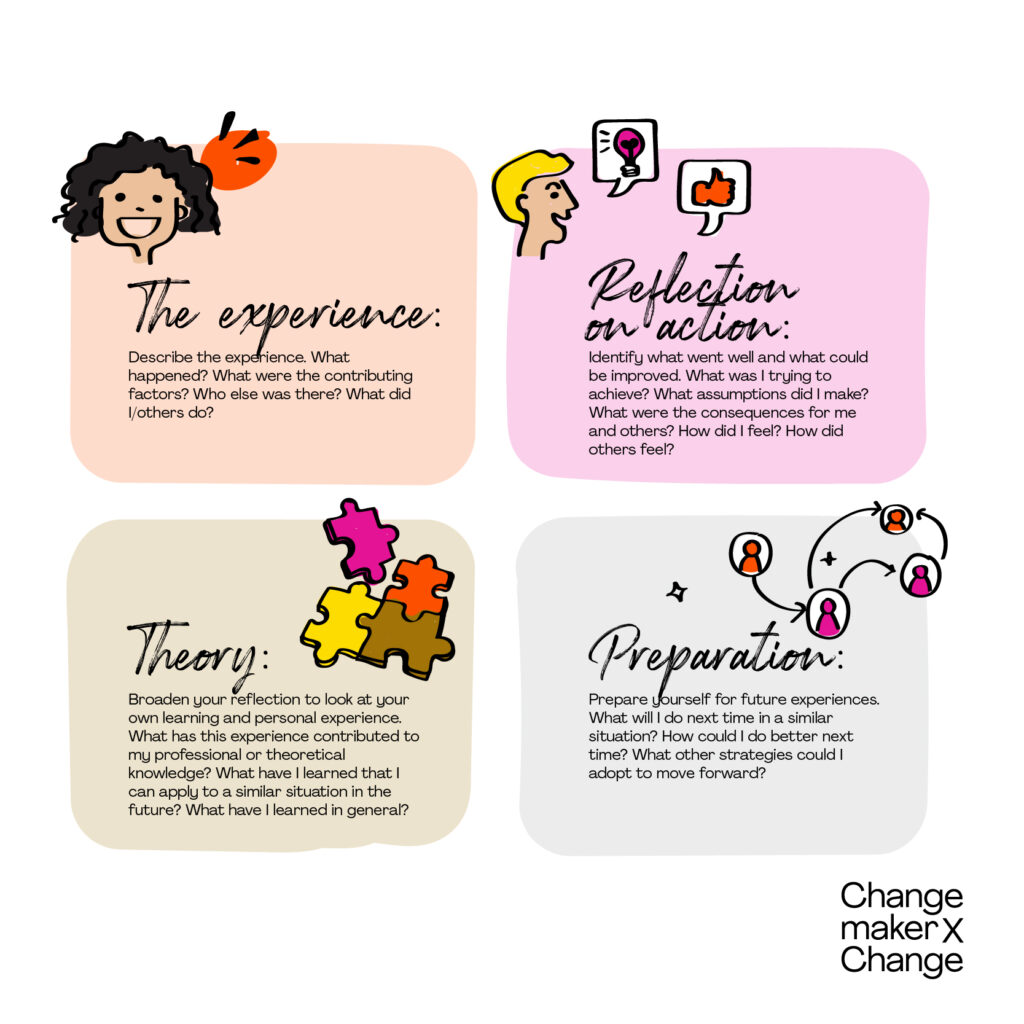
- The experience: Describe the experience. What happened? What were the contributing factors? Who else was there? What did I/others do?
- Reflection on action: Identify what went well and what could be improved. What was I trying to achieve? What assumptions did I make? What were the consequences for me and others? How did I feel? How did others feel?
- Theory: Broaden your reflection to look at your own learning and personal experience. What has this experience contributed to my professional or theoretical knowledge? What have I learned that I can apply to a similar situation in the future? What have I learned in general?
- Preparation: Prepare yourself for future experiences. What will I do next time in a similar situation? How could I do better next time? What other strategies could I adopt to move forward?
These are just a few of maaany harvesting and reflection frameworks. We also like to use practical formats such as theatre performances or creative tools such as Dixit cards to cater for more practical and emotional learners. For more inspiration, we invite you to check out the Reflectors’ Toolkit on experience by the University of Edinburgh or the Hyper Island Toolbox.
•••

We know how important it is to practice a model to fully absorb it, so we’d like to invite you to a one-hour call on Wednesday, 29 September 2021 at 2:00–3:00pm GMT+2 where you will get the chance to try out yet another harvesting and reflection framework. The call will take place on Zoom (link here) and all you need to bring is one experience you’d like to harvest and reflect on, a notebook and a few coloured markers or pens.