By Lisa Glybchenko and Greta Rossi
Dear Facilitators,
Welcome to the third newsletter from The Facilitators in 2026! As we wrap up our exploration of multiperspectivity, we move from “concepts” and “lived experiences” to “tools” by introducing you to the Timeout Dialogue method.
Timeout Dialogue is an original method for conducting facilitated discussions with diverse groups of people, offering a robust set of tools for planning and hosting dialogues, as well as materials in several languages. The objective of such discussions is not just to build a greater understanding of the topics but also to deepen awareness of oneself and others, leading to unpredictable insights.
Throughout this newsletter, we will present one of the four ground rules of this method in an artistic form so you understand how it might support you in your role as a facilitator and convener of multiple perspectives.
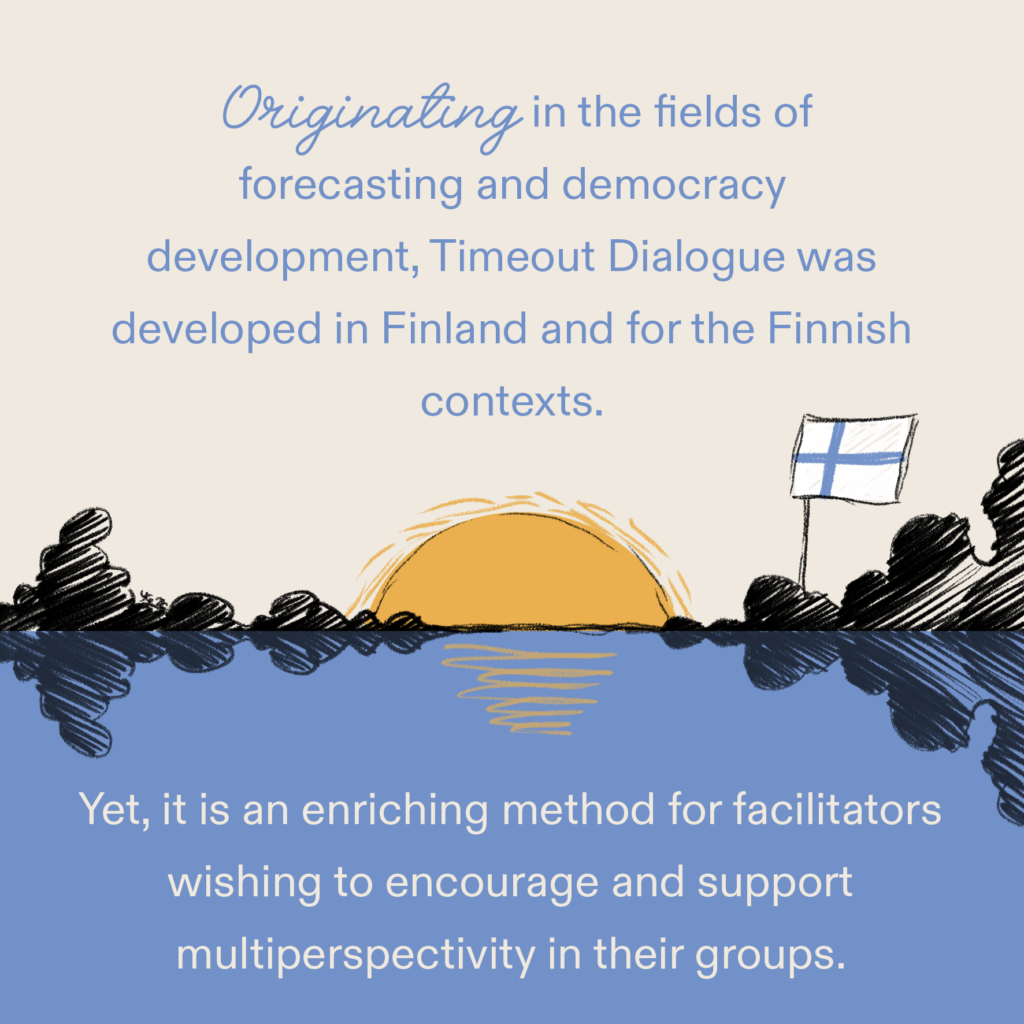
The origins
Facilitation as an architecture for constructive interactions
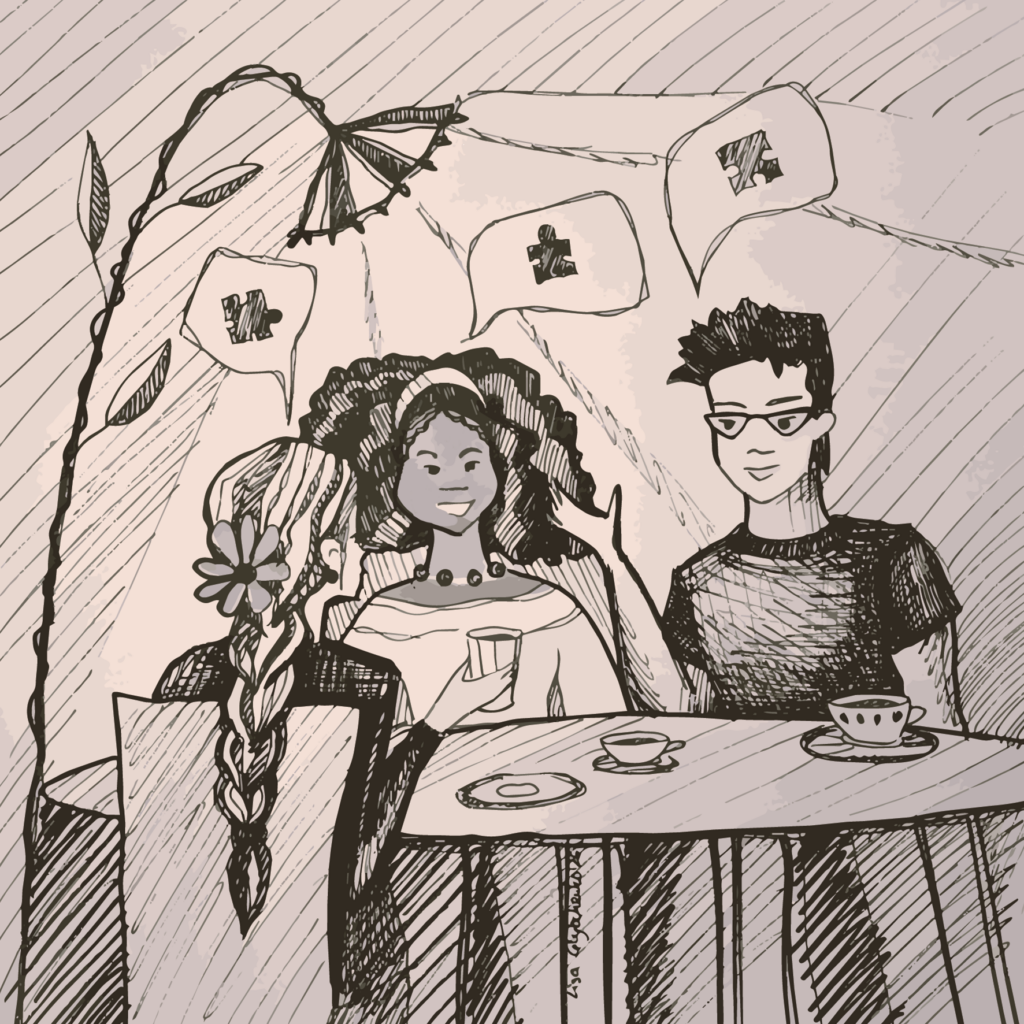
Timeout Dialogues are designed and facilitated in a way that fosters constructive interactions. The objective is not persuasion but learning more about a topic whilst also constructively building on personal perspectives and emotional connections. By doing so, the focus is on contextualising the topic, rather than establishing the “one truth”. Through skilful facilitation, you can create a space for honest conversations.

The four ground rules
The Timeout Dialogue method follows four ground rules. The rules were designed to create an equitable and reflective environment as well as a meaningful dialogue process for all the participants.
- Listen to others without interrupting or having side conversations.
- Share your own experiences and perspectives.
- Allow room for unfinished thoughts and different viewpoints.
- Respect others and keep the dialogue confidential.
These rules are explained in detail on the Timeout Dialogue website. While all these rules are equally important, this newsletter dives deeper into the power and beauty of unfinished thoughts.
Making space for unfinished thoughts
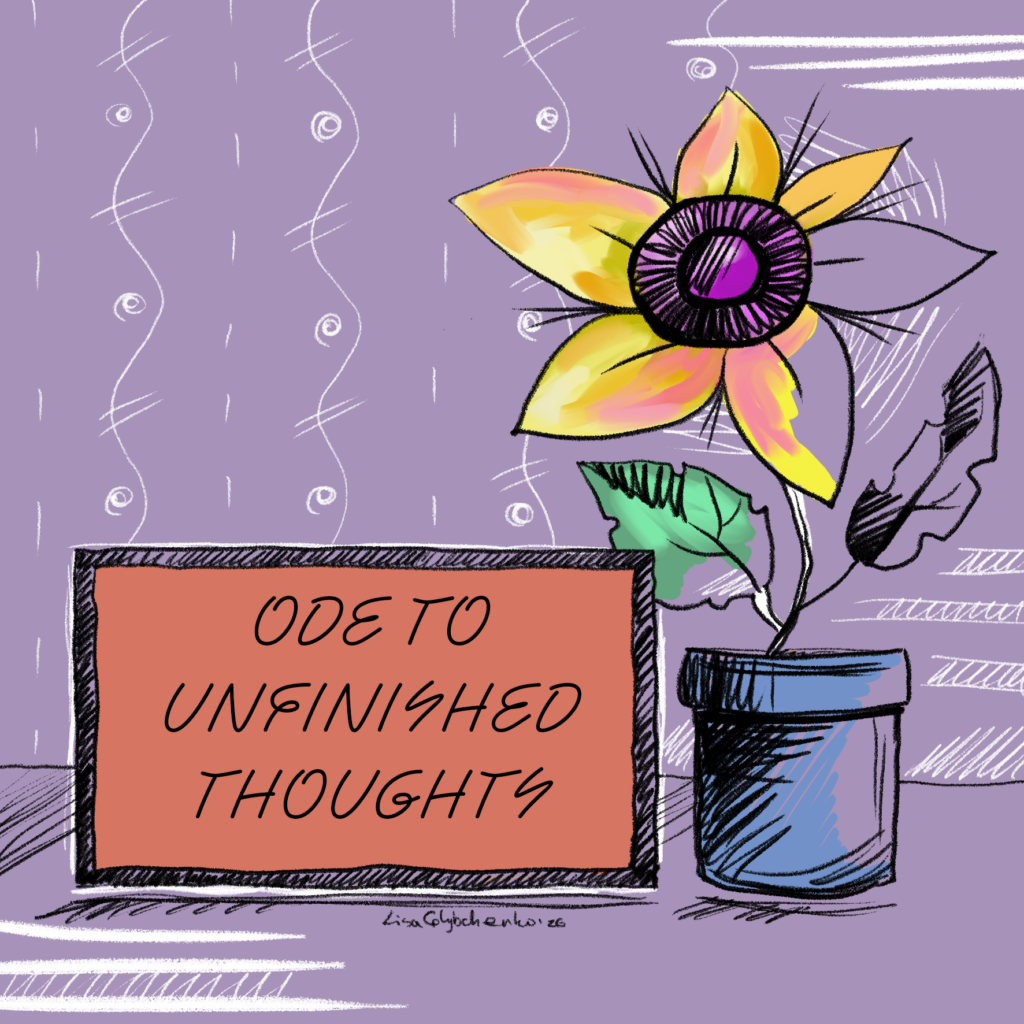
In order to make space for constructive interactions, Timeout Dialogues invite unfinished thoughts into the conversation. Why are unfinished thoughts so important?
- Generally, they lower anxiety thresholds for people to engage in a dialogue, ultimately making the dialogue more inclusive. By removing the pressure to share an eloquent and polished thought, you encourage genuine and authentic expression among people engaging in the conversation. This way, people can grow and flourish in the dialogue process.
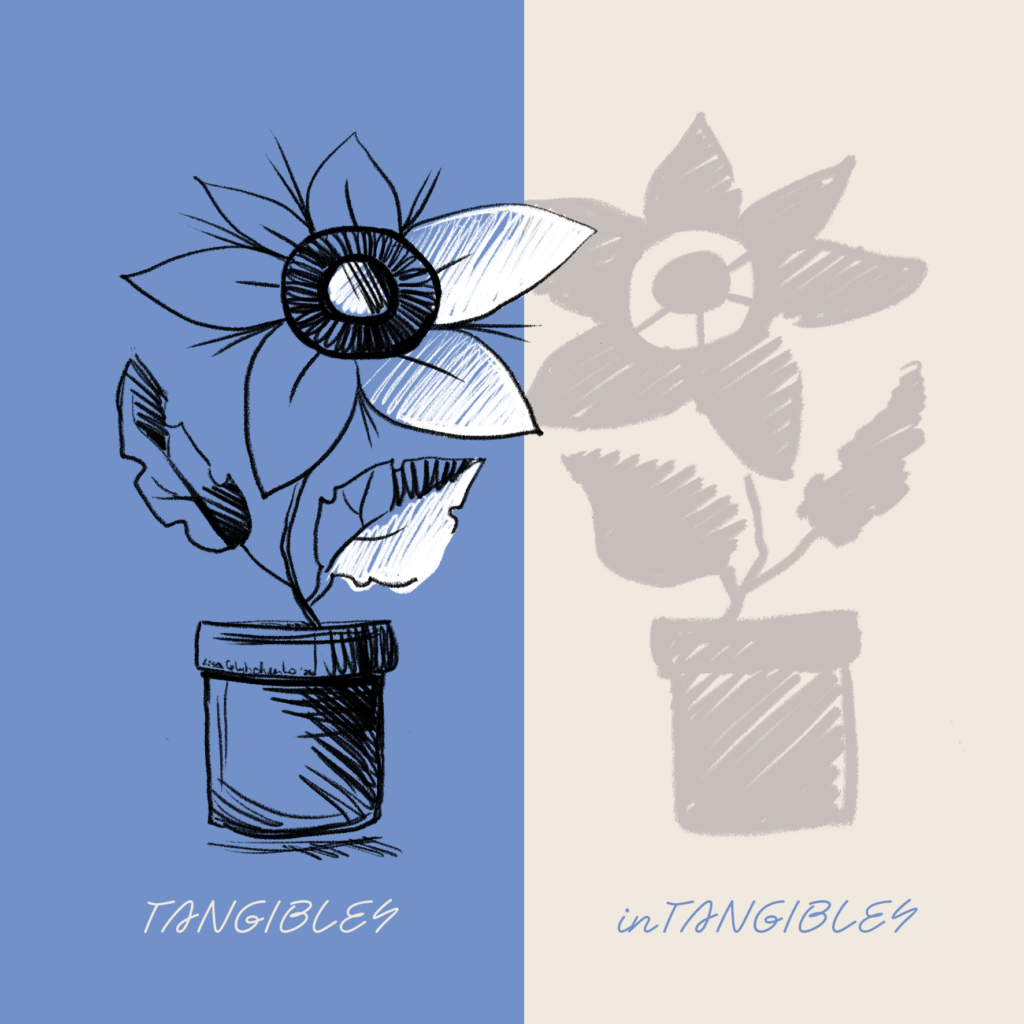
- Specifically, they allow for the “invisibles” and “intangibles” that are often not captured by pure logic or statistics, such as people’s feelings about the topic, the energy flowing among them… These intangibles help people deepen their understanding, activate their emotional intelligence, and move through the conversation together.
- Finally, they help surface what is emerging among and through participants, where energy is flowing, where it is stuck… For a facilitator, they offer cues about the direction of the dialogue and people’s experiences throughout it – informing whether additional dialogues are needed to further support community-work in the long-term.
Reclaiming the art of conversation
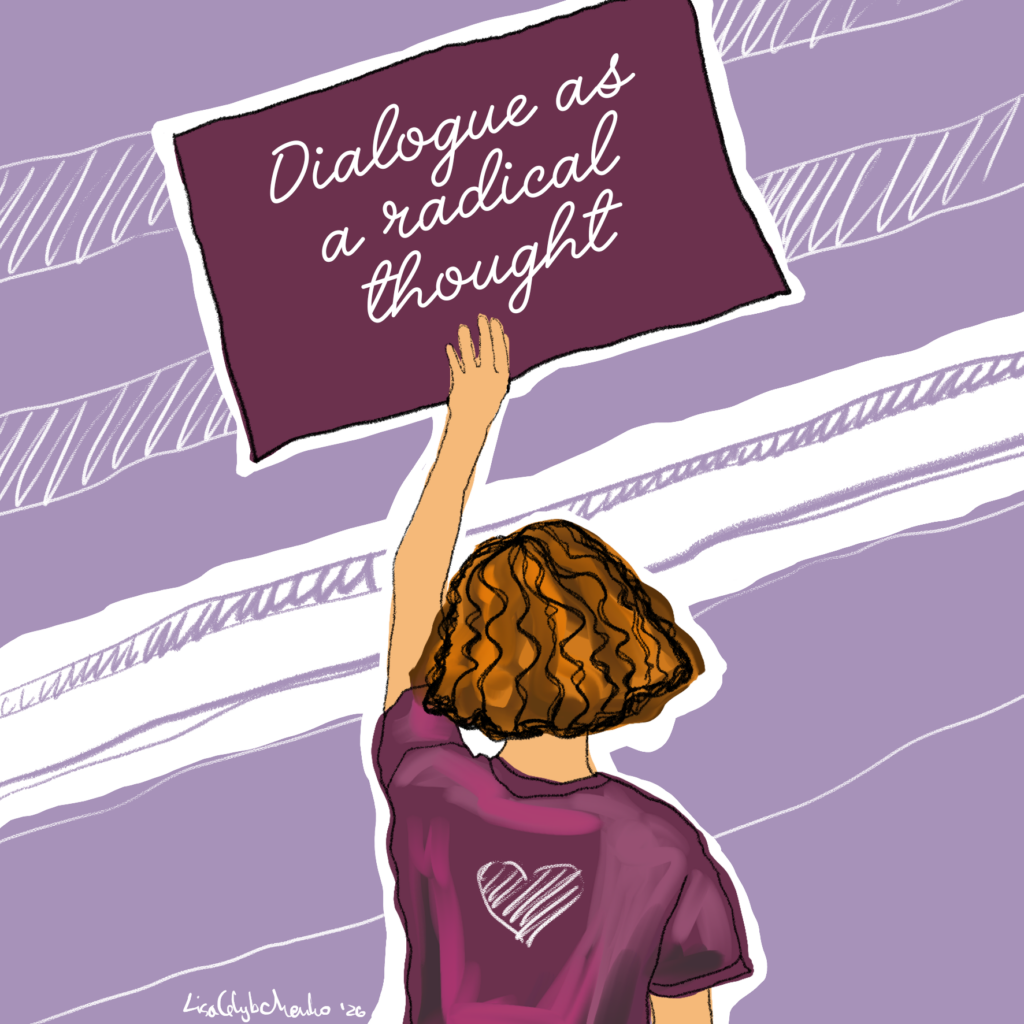
Through this method, facilitators support people in reclaiming the increasingly lost art of conversation. Timeout Dialogues offer safer spaces where people can engage with and be enriched by the nuances of multiperspectivity – an essential skill to ensure inclusion in our fragmented societies.
Join our online teaser session
If you are intrigued to find out more about this tool, we invite you to join our online teaser session with Efe Evwaraye, Timeout Dialogue facilitator, who will share more about the essentials and practicalities of this method. The session will take place on Monday, 25th May 2026 at 12:00–1:15 pm CEST OR at 5:00–6:15 pm CEST on Zoom.

That’s all from us!
With this newsletter, we are wrapping up our exploration of the skill of multiperspectivity (if you wish, you can go back to the first and second newsletters on the topic). The next round of newsletters will land in your inbox starting in September 2026 and will focus on a second set of skills: decision making and problem solving. Until then, happy facilitating!