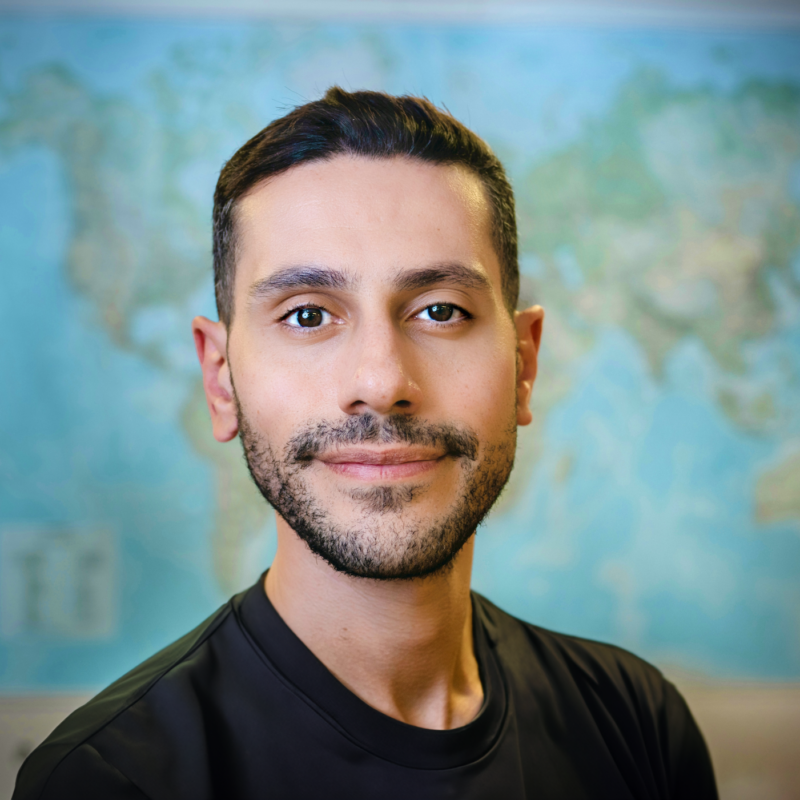
Tariq Al-Olaimy
(he/him)Bahrain
Co-founder of a global ecosystem of social and planetary systems initiatives, including:
- 3BL Associates, a people + planet systems transformation consultancy
- Diversity on Board, promoting human inclusion and interspecies equity on boards across MENA
- Public-Planet Partnerships, a framework facilitating regenerative inter-species collaborations
- Recipes for Wellbeing, supporting the systemic wellbeing of changemaking organizations
- FutureFaith, harnessing the wisdom of spiritual traditions to reimagine solutions for climate and nature
- Postgrowth.earth, a knowledge base for post-growth social innovation
Tariq is among the first 100 certified Biomimicry Specialists globally, with an academic background spanning investment and financial risk management, degrowth and post-growth economics, exponential innovation, and spiritual ecology. Tariq has held advisory, ambassador, board, and co-chair roles with the World Economic Forum Foundations, Global Shapers Community, UNESCO, UN Decade on Ecosystem Restoration, UN Climate Change High-Level Champions, Carboun, EAT, and the Wellbeing Economy Alliance.
As an Ubuntu peer peace coach and community leader, Tariq brings over a decade of experience within international faith and climate movements. He is a member of the World Economic Forum’s Global Future Council on Faith in Action and advises and collaborates with organizations, including the G20 Global Land Initiative and Greenpeace MENA on engaging faith communities in climate action and ecosystem restoration.
Tariq has conducted trainings and workshops across six continents, reaching over 140 nationalities. His work has been featured in The New York Times, TED, The Guardian, Al Jazeera, and Stanford Social Innovation Review. He hosted the Dubai Expo 2020 ‘People and Planet’ Podcast and is a Fellow of the Royal Society of Arts (FRSA), with multiple global awards for projects advancing the UN Sustainable Development Goals.
Thematic Areas
- Wellbeing and Wholebeing
- Values-Based Leadership
- Economic Systems Change
- Biomimicry and Multi-Species Simulations
- Social Innovation