
Dear Facilitators,
Welcome to the 11th CXC Facilitation Newsletter!
As I (Greta here, CXC Facilitation Consultant who usually writes these newsletters) return to work after my maternity leave, I would like to first give a big shoutout to Esther for letting us discover the Futures Thinking methodology in the September 2024 newsletter. We hope to feature more guest pieces in the future!
Today, we invite you to get raw and real because we will be exploring the role of emotions in facilitation (Esther also mentioned the importance of navigating emotions in futures thinking). Pause already and notice your reactions. Are you feeling angsty at the idea of exploring this muddly territory? Or are you annoyed because, really, emotions should be left at the door? Or are you experiencing anticipation because you would like to become more proficient in facilitating emotions?
Whatever your reaction, can you locate it in the body? Pay attention to the physical sensations you are experiencing right now. Sweaty hands? A faster heartbeat? A tightness in the belly? A sense of numbness? Don’t worry if you can’t ‘feel’ anything – many of us operate on an emotional autopilot without being aware of our emotions or suppressing them entirely.
We hope this newsletter will provide useful terminology and spark insightful reflections to boost your confidence in facilitating emotions.
Emotions 101
What are emotions? In a nutshell, emotions are your body’s immediate and physical reactions in response to external events or situations. More complex than fleeting feelings, emotions are intricate (initially unconscious) processes that involve your brain, body, as well as your social interactions. As a facilitator, they influence your decisions, relationships, and perception of the world around you.
Here is a facilitation scenario to uncover the three components to an emotion: “You are explaining an activity when a participant interrupts you mid-sentence to make a comment. You lose your train of thought.”
- Internal feeling: You feel uneasy and nervous because the interruption triggered a sense of insecurity that reminds you of an early childhood experience.
- External expression: Your jaw drops as you seek words that don’t come out and are left speechless.
- Physiological changes: Your breathing becomes quicker and shallow, and your cheeks blush.
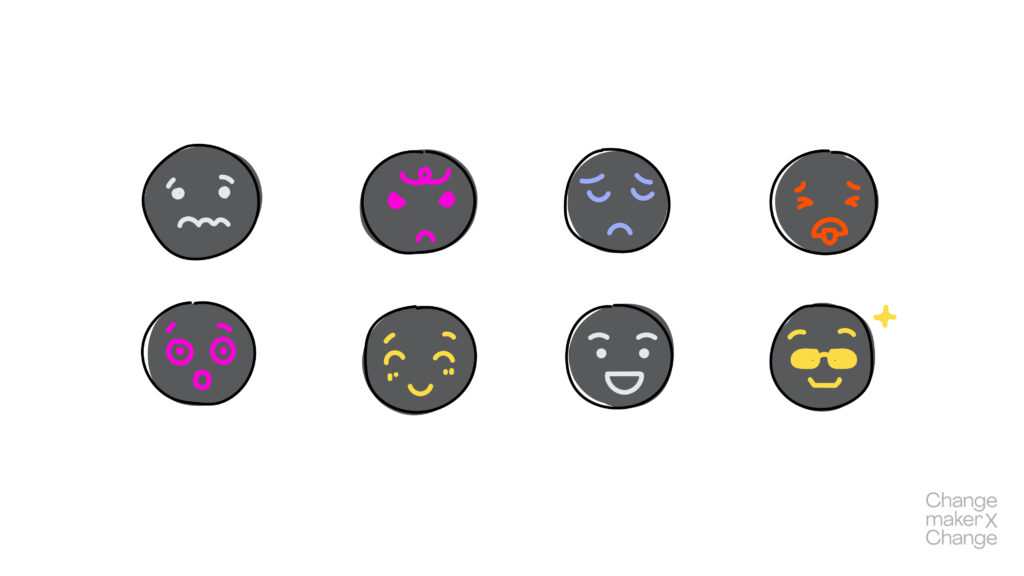
What is the core emotion you experience in this scenario given the elements above? Fear. (Others might respond differently and get angry.) Fear, alongside anger, sadness, disgust, surprise, and joy make up the 6 basic or universal emotions (some psychologists include trust and anticipation too).
Emotional Intelligence
Humans have a tendency to overestimate the power of the rational mind and underestimate the influence of emotions on our choices and behaviours. Psychologists Peter Salvoes and John Meyer developed the concept of emotional intelligence, then popularised by Daniel Goleman. It refers to “our ability to accurately detect, express and manage emotions in ourselves and others”. In particular, it looks at the degree to which you can:
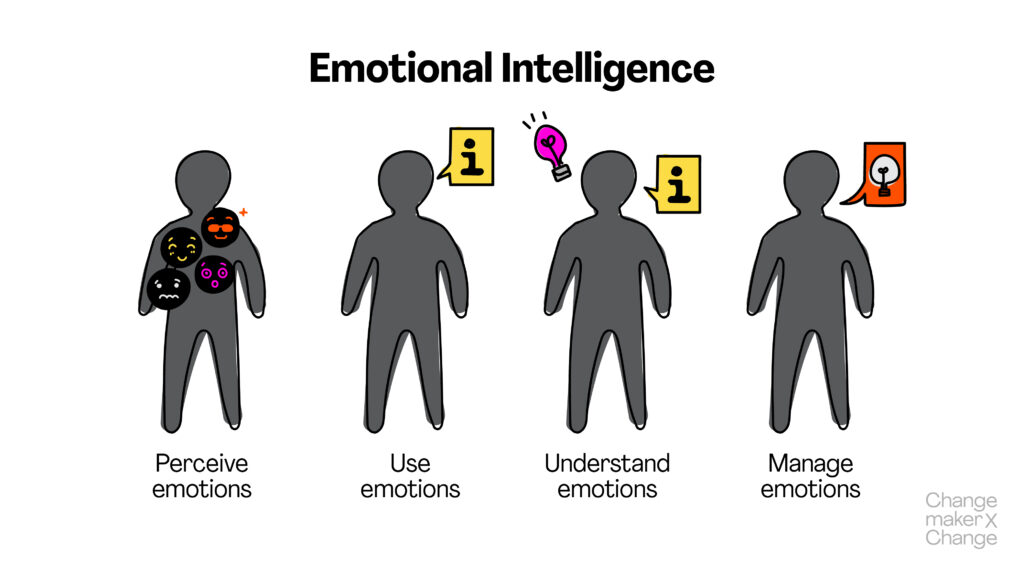
- Perceive emotions: Both accurately identify, differentiate and express your feelings and emotions in yourself and the needs underlying them and identify emotions in others.
- Use emotions: Both redirect and prioritise your thinking to facilitate your models and use your emotional states to facilitate particular tasks or thinking.
- Understand emotions: Understand the complexities of emotions, contradictory emotions, and causes and consequences of emotions.
- Manage emotions: Both your ability to be open to both pleasant and unpleasant emotions and to monitor, reflect on and detach from emotional states.
If you’re curious, test your emotional intelligence with this quiz by the Greater Good Science Center.
Emotional Agility
Unfortunately, emotional intelligence has come to be understood as ‘controlling’ difficult emotions. However, emotions are not inherently ‘bad’. They might not always be reliable, or they might be inappropriate in a particular context, but they are not the villain. That’s why Susan David prefers to speak of emotional agility, which means “being flexible with your thoughts and feelings so that you can respond optimally to everyday situations”. This is different from ‘emotional rigidity’ which is when you get hooked by thoughts, feelings, and behaviours that don’t serve you. There are four steps to cultivating emotional agility:
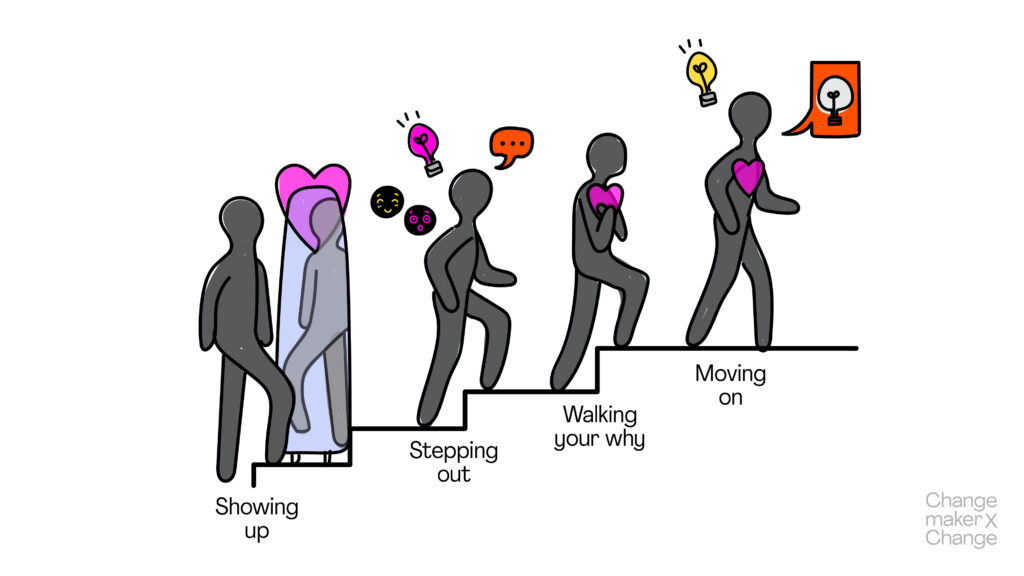
- Showing up: Seeing yourself (with your thoughts, emotions, and behaviours) with curiosity, compassion, and courage.
- Stepping out: Creating a space between you and your thoughts, emotions, and behaviours.
- Walking your why: Focusing on your core values and your most important goals.
- Moving on: Cultivating habits to make small tweaks and bring about incremental changes to break out of unhelpful patterns and create more helpful ones.
If you’re curious, assess your emotional agility with this quiz by Susan David.
Emotional Regulation
As a facilitator, it is essential you build your capacity to regulate your emotions as well as support participants’ emotional regulation. At its simplest, emotional regulation means changing the trajectory of an emotional response. Some of the benefits of emotional regulation include an increase in pleasure and a reduction in pain, as well as a minimisation of feelings of negativity and sadness. Moreover, emotional regulation can help manage interpersonal interactions to avoid or transform conflicts and it can support the optimisation of how information is processed to enhance individual and group performance. You can choose to:
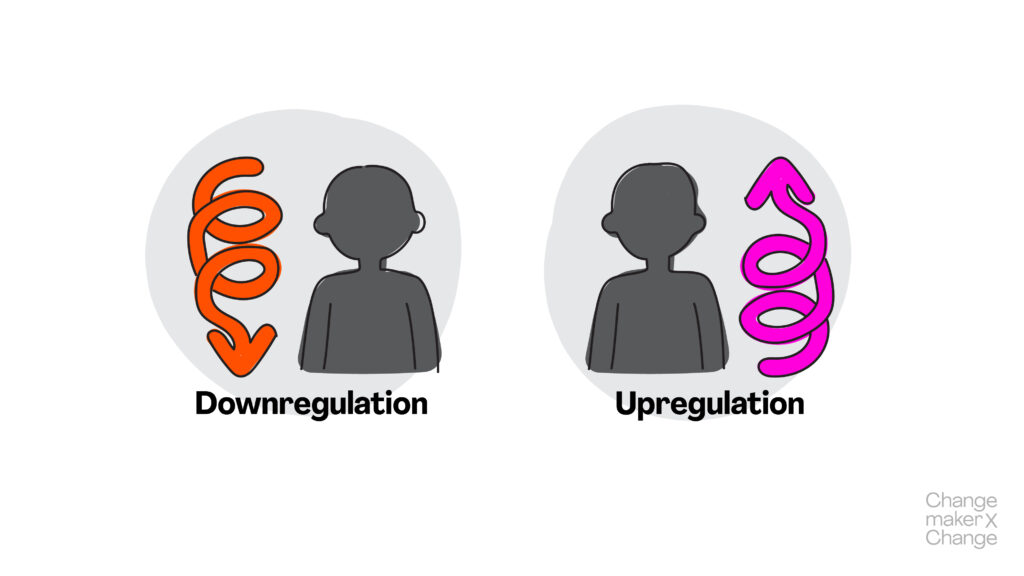
- Downregulate: Controlling your anger towards a situation.
- Upregulate: Increasing your excitement for a new activity.
Emotional Granularity
To become emotionally intelligent and agile facilitators and effectively regulate your emotions (and help your participants to do the same), it is vital to develop emotional granularity. This refers to the ability to identify and describe emotions with precision. Unfortunately, most of us are emotionally illiterate and often lack more nuanced terms to describe how we feel and what emotions we are experiencing.
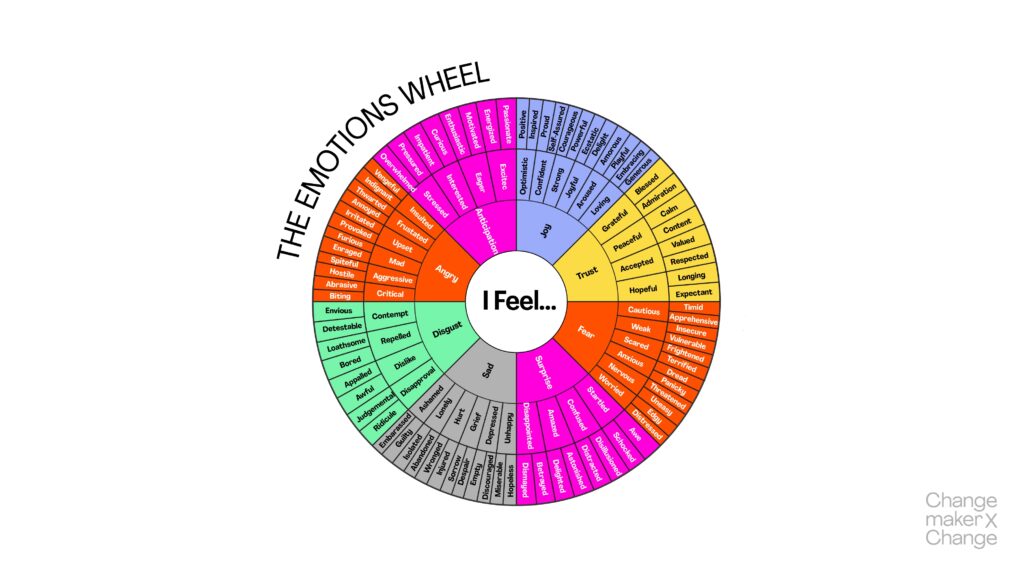
Check out the emotions wheel on Recipes for Wellbeing to familiarise yourself with more subtle feelings and emotions and use it next time you facilitate a check-in activity.
•••

Join our next practice call on Thursday, 3 April 2025 at 3:00–4:00pm GMT+2 to practice somatic awareness, emotional granularity, and emotional regulation across different facilitation scenarios. The call will take place on Zoom (link here) and you will shortly receive a calendar invite. Please either accept, tentatively accept, or decline the invite so we know how many of you will be there.